
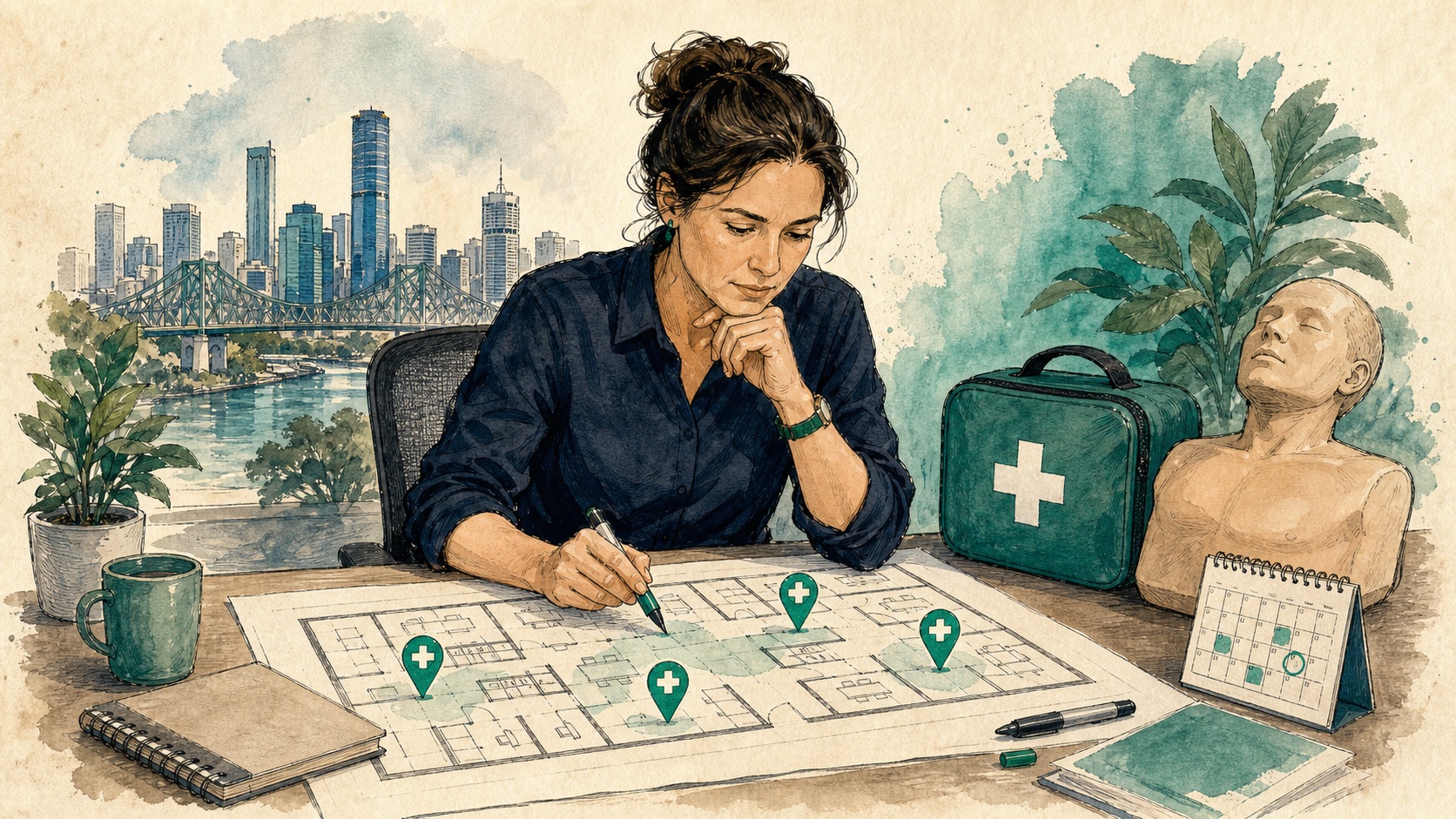
If you want the quick answer to “how many first aiders do I need in QLD?”, start here:
Low-risk workplaces commonly use one first aider per 50 workers. High-risk workplaces commonly use one per 25 workers. Remote high-risk workplaces commonly use one per 10 workers.
Useful? Yes.
Enough? Not quite.
Because your real question is not “what number appears in the Code of Practice?” Your real question is: “If something happens at my workplace, who can actually help, how fast, and are they current?”
That is where most workplaces get caught. They count heads, find a ratio, nominate one person, and feel done. Then real life walks in: lunch breaks, sick days, split shifts, vans on the road, staff working alone, two buildings, no phone reception, or the nominated first aider being the person who needs help.
This guide is the practical version. Start with the ratio, then work out the number your Brisbane workplace actually needs.
How Many First Aiders Do I Need in QLD?
The usual first aider ratio guidance is:
1:50
Low-risk workplaces, such as many offices or low-risk retail settings
1:25
High-risk workplaces, such as warehousing, construction or higher-hazard work
1:10
Remote high-risk workplaces where help may be harder to access
12mo
Common CPR refresher cycle to keep in your planning
These ratios come from first aid code guidance and are best treated as a starting point.
The ratio is guidance, not a personalised answer
WorkSafe Queensland says first aid arrangements depend on the work, hazards, workplace size and location, and who is present. For the broader compliance picture, read our Queensland workplace first aid requirements guide.
This article is about the narrower decision: how many people should you train?
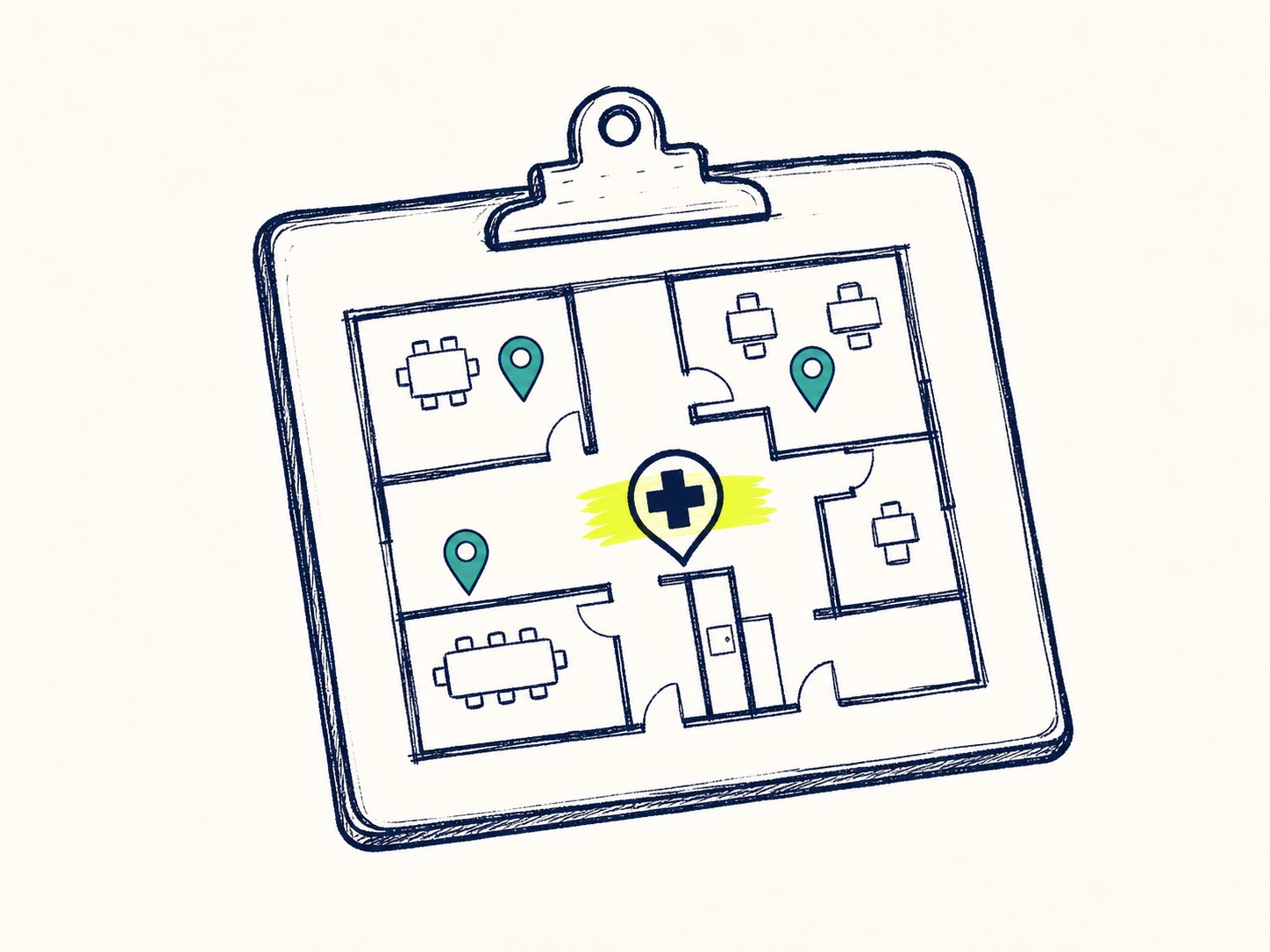
The Four-Step Coverage Check
Use this before you decide the number.
1. Count people present, not people employed
A business with 60 employees does not always have 60 people onsite. You might have 25 in the office, 12 on the road, six working from home, three on leave and a few casuals on different days.
So count:
- the highest number of staff present at one time
- contractors, visitors, clients, students or patients where relevant
- separate shifts, not just total headcount
- separate sites, floors, warehouses, yards or vehicles
If 30 people are present in the morning and 30 different people are present at night, one day-shift first aider does not cover both.
2. Decide whether the work is low risk or high risk
A small office and a busy warehouse do not need the same answer.
Low-risk work usually means serious injury is less likely. Think office administration, low-risk professional services, some retail and desk-based teams.
High-risk work means injury is more likely or the consequences could be more serious. Think construction, warehousing, manufacturing, electrical work, machinery, chemicals, childcare, school environments, outdoor work, traffic movement, vehicles or public-facing care settings.
When in doubt, be honest about the actual hazards. A tidy spreadsheet does not stop a forklift, a fall, a live electrical incident or a child having a severe allergic reaction.
3. Check whether a trained person can actually reach the incident
This is the bit the ratio cannot see.
Ask:
- how far is the furthest point from the nominated first aider?
- can staff quickly find and contact them?
- what happens during lunch, meetings, leave and sick days?
- what happens if the first aider is the person injured?
- is there an AED, and who would get it?
One first aider can be a single point of failure
If your plan only works when one specific person is onsite, available, reachable and uninjured, it is fragile. A better plan usually has backup.
4. Add backup for the messy parts
This is where the number usually goes up.
You may need extra first aiders for:
- annual leave and sick days
- lunch breaks and meetings
- multiple shifts
- separate buildings or floors
- field work and vehicles
- lone or isolated work
- high-risk tasks
- workplaces where more than one person could be injured
The most useful question is not “what is the minimum?” It is “would this plan still work on an ordinary messy day?”
Quick Workplace Examples
These are not legal rulings. They are practical examples to help you think.
Small low-risk office
12 staff, one floor
- One first aider may be the starting point
- Two is often smarter for leave and lunch cover
- Check CPR currency every year
Warehouse or trade site
25-40 staff, higher risk
- Use the high-risk ratio as the starting point
- Train backup across work areas and shifts
- Consider AED access and response time
Mobile team
Crews driving between jobs
- Do not rely only on office headcount
- Add vehicle kits, check-ins and communication
- Use awareness training as an extra support layer
Here are a few more grounded examples.
25-person Brisbane office
The ratio might suggest one first aider. In practice, two or three trained people may be more sensible. That covers leave, part-time schedules, lunch breaks and the chance that the nominated person is unavailable.
40-person warehouse
This is more likely to be treated as higher risk. Two first aiders may be the starting point, but layout matters. If the team is split between loading areas, storage, office and dispatch, you may want coverage across those areas instead of two people who sit together.
Childcare, school or clinic setting
The ratio question is only part of it. Some staff may need current first aid or CPR because of their role, sector, employer policy or registration expectations. In those workplaces, group training often solves both the workplace coverage issue and the individual currency issue.
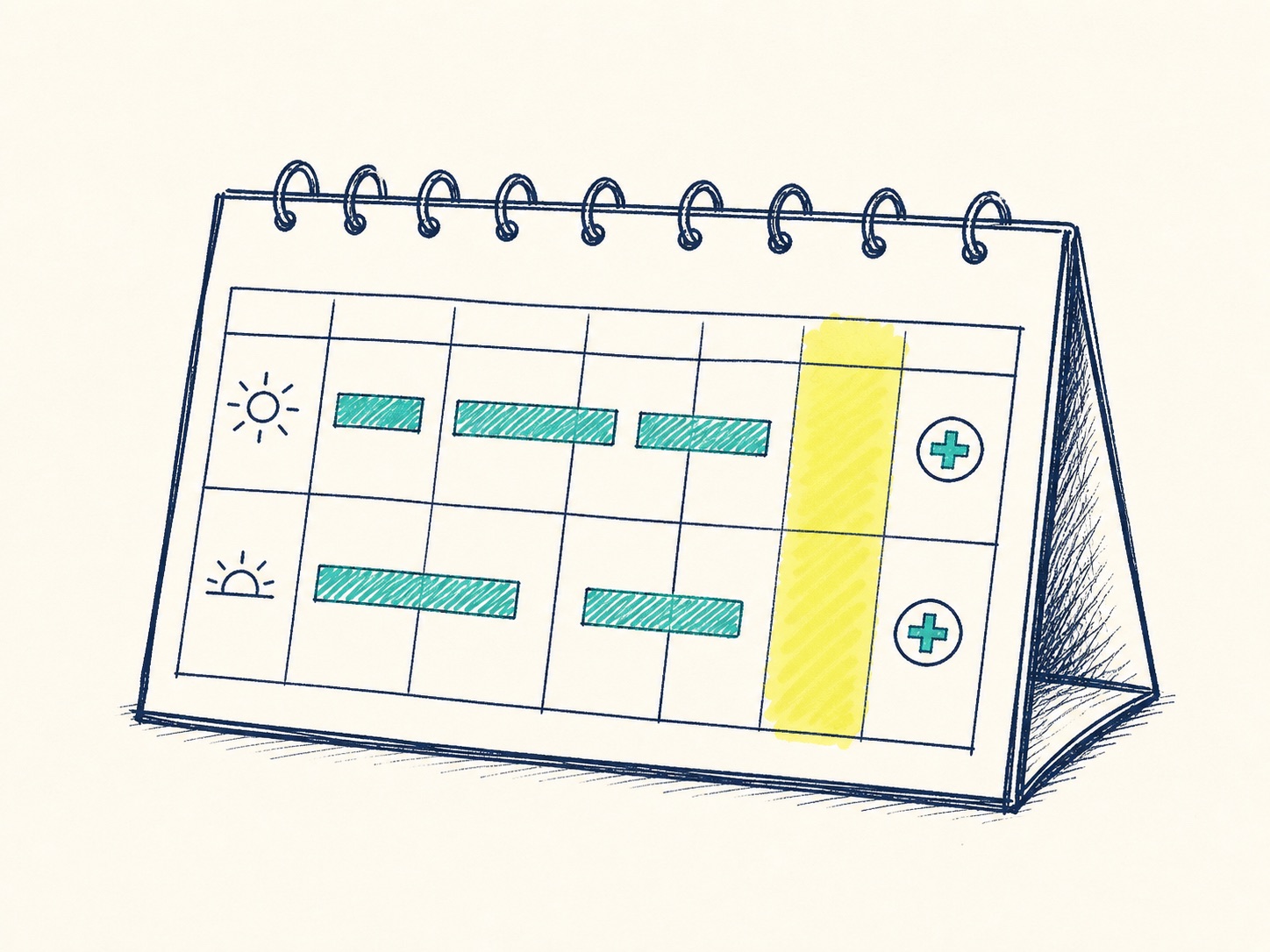
Split shifts
If you have one first aider on the morning shift and none in the afternoon, your ratio might look fine on total staff numbers but fail in real life. Count by who is present at the time work happens.
Mobile trade or landscaping crew
This is where the mobile-worker question matters. The issue is not just “how many first aiders are on payroll?” It is “what happens where the work actually happens?”
If staff work away from the main workplace, your plan may need to travel with them.
Mobile, Remote or Isolated Workers Need a Different Layer
Remote or isolated work does not always mean the outback. WorkSafe Queensland describes it as work separated from other assistance because of location, time or the nature of the work.
For a Brisbane business, that could include:
- landscapers working across separate properties
- electrical or trade teams driving between jobs
- community nurses or allied health workers doing home visits
- sales reps, inspectors or drivers where the vehicle is part of the workplace
- staff working alone early, late or away from the main team
In these cases, it may not always be practicable to have a certified first aider immediately beside each worker. That does not remove the need for first aid planning. It changes the control mix.
Brisbane / Queensland
Ask the field-work question
If a worker is alone, mobile or away from the main site, ask: how do they call for help, what first aid equipment do they have, who checks on them, and what instruction have they had for a serious injury or illness?
Practical controls may include:
- portable first aid kits in vehicles
- clear emergency escalation steps
- reliable phone, radio or alternative communication
- check-in procedures
- enough certified first aiders across the wider team
- extra information, instruction or training for workers who may be first on scene
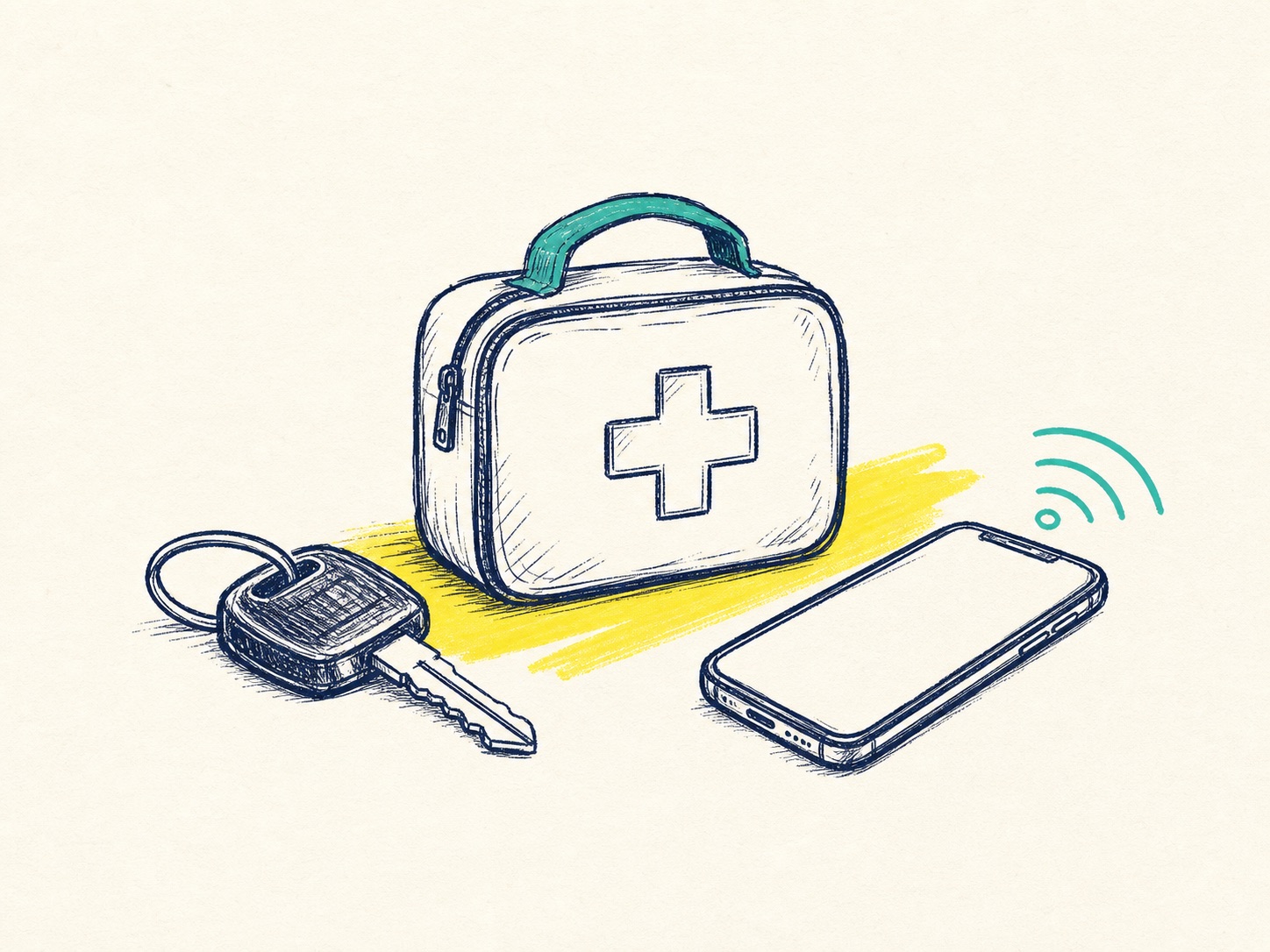
This is where online first aid awareness training can be useful.
It should not be sold to yourself as a replacement for nationally recognised first aid training where the risk says certified first aiders are needed. But it can be a sensible support layer for remote, isolated or lone workers who may need to recognise a serious problem, call for help, use the available equipment and follow a basic response plan while waiting for assistance.
That is the honest position: awareness training strengthens the plan. It does not magically remove the need for trained first aiders.
Need to train a practical first aid cohort for your team?
Ratio Answer vs Real Answer
Here is the distinction in plain terms.
The ratio answer
Fast, useful, incomplete
- Gives a starting number
- Helps with basic planning
- Misses shifts and leave
- Misses layout and travel time
- Misses mobile and lone workers
The coverage answer
Built for the way work actually happens
- Counts people present by shift
- Checks who can reach the incident
- Builds in backup first aiders
- Includes workers away from the main site
- Tracks CPR and first aid renewal dates
The coverage answer is the one you want when someone hits the floor.
What Training Should Those First Aiders Have?
For most general workplaces, the usual qualification is HLTAID011 Provide First Aid. It covers responding to a first aid incident, applying first aid procedures, communicating details and reviewing the incident.
For CPR currency, check HLTAID009 Provide cardiopulmonary resuscitation. CPR refreshers are commonly recommended every 12 months, while full first aid qualifications are commonly renewed every three years.
Train enough people to make renewals easier
If you train a small group together onsite, you can align renewal dates and avoid the spreadsheet mess of one person expiring in March, another in July, and someone else quietly lapsing two years ago.
Some workplaces need more specialised training. Childcare, schools, electrical work, remote work and some professional settings may have extra requirements or expectations. Check the relevant guidance for your sector.
A Simple First Aider Number Checklist
Before you book training, run this list.
- Start with the ratio: low-risk 1:50, high-risk 1:25, remote high-risk 1:10.
- Count people present at the busiest time, not total employees.
- Split the count by shift, site, floor, building, yard or vehicle.
- Mark who is actually available during leave, lunch, meetings and sick days.
- Check how quickly a trained person can reach the furthest likely incident.
- Add backup if one first aider would be the single point of failure.
- Identify mobile, remote, isolated or lone workers.
- Add vehicle kits, communication and check-in procedures where needed.
- Decide whether awareness-style instruction would help workers away from immediate support.
- Check annual CPR and three-year first aid renewal dates.
If you finish that list and think, “Right, this is more than just one person with a certificate,” that is usually a good sign. You are thinking about the incident, not just the paperwork.
Bottom Line
So, how many first aiders does your Brisbane workplace need?
Start with the ratio. Then make it real.
A tiny low-risk office might start with one trained first aider, but two is often more practical. A warehouse, school, childcare centre, clinic or trade team may need several. A mobile or lone-worker team needs extra thinking around kits, communications and what workers know before help arrives.
The goal is not to win the smallest-number competition. The goal is for trained help to be available when someone actually needs it.
Frequently asked questions
How many first aiders do I need in QLD?
The common starting point is one first aider per 50 workers in low-risk workplaces, one per 25 in high-risk workplaces, and one per 10 in remote high-risk workplaces. You then need to adjust for shifts, layout, leave, lone work and response time.
Is one first aider enough for a small workplace?
Sometimes. A small, low-risk workplace with everyone together on one shift may start with one first aider. Two is often more practical because it gives cover for leave, lunch breaks, meetings and sick days.
Do first aider ratios apply to each shift?
Your first aid coverage needs to work when people are actually present. If you have separate shifts, make sure each shift has suitable access to trained first aiders, not just the business as a whole.
What if my workers are remote, mobile or working alone?
You may need extra controls such as portable first aid kits, communication procedures, check-ins, enough certified first aiders across the wider team, and information or training so workers know how to respond if help is not immediately beside them.
Does online first aid awareness training replace certified first aiders?
No. Awareness training can support remote, isolated or lone workers, but it does not replace nationally recognised first aid training where your workplace needs certified first aiders.
If the numbers say you need more certified first aiders, the fastest route is onsite first aid training in Brisbane. We come to your workplace and certify the whole team in one visit — including North Brisbane and Moreton Bay.
Once you know who needs training, follow our group first aid training organiser checklist to move from headcount to quote, date, venue, learner preparation and records.
Ready when you are
Train the right first aiders for your Brisbane workplace
See your price in about 60 seconds. No forms. No phone calls. No one’s going to ring you.
★★★★★
200+ five-star reviews from Brisbane workplaces